

Why Is My Cat Vomiting? Common Causes, Warning Signs, and What to Do
Article Index
- Quick Answer: Why Is My Cat Vomiting?
- Is It Normal for Cats to Vomit?
- Common Reasons Why Your Cat Is Vomiting
- Quick Table: Common Causes of Cat Vomiting
- What Different Types of Cat Vomit May Mean
- Detailed Cat Vomiting Questions
- Quick Guide: Cat Vomit Color and Meaning
- When Should You Worry About Cat Vomiting?
- What Should You Do If Your Cat Vomits?
- How to Help Prevent Cat Vomiting
- FAQ: Cat Vomiting
- Final Thoughts
Quick Answer: Why Is My Cat Vomiting?
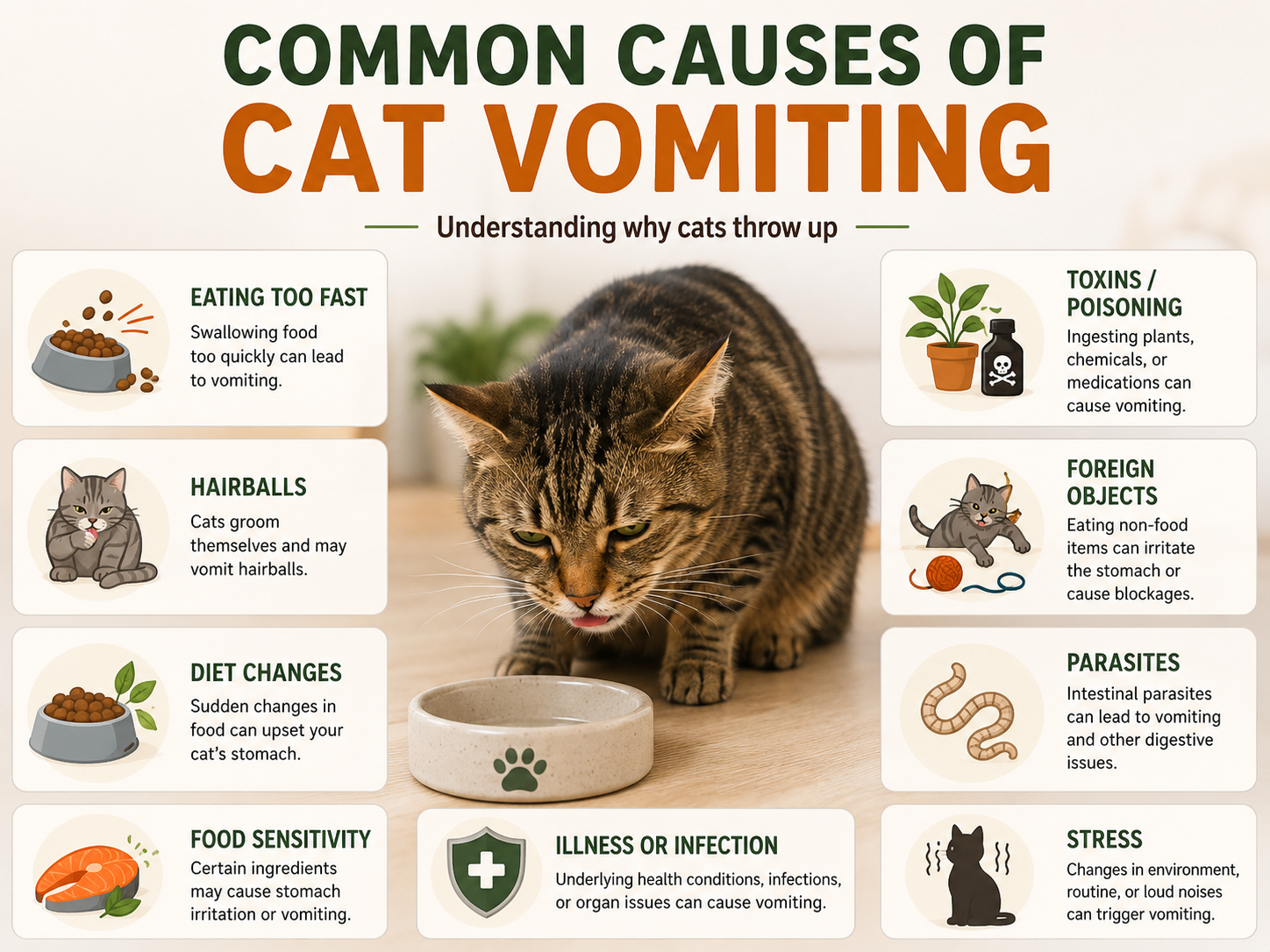
Your cat may be vomiting because of hairballs, eating too fast, sudden diet changes, food sensitivity, parasites, stress, toxins, infection, intestinal blockage, or an underlying health condition. Occasional vomiting may happen in cats, but frequent vomiting, vomiting blood, vomiting with weakness, or vomiting with appetite loss should be checked by a veterinarian.
Introduction
If your cat suddenly throws up, it can be worrying and confusing. One minute your cat seems perfectly fine, and the next you are cleaning vomit from the floor. The good news is that occasional vomiting can happen in cats, especially if it is linked to hairballs, eating too quickly, or a mild stomach upset. However, frequent vomiting should never be ignored.
Cats may vomit for many reasons, including hairballs, diet changes, food sensitivity, parasites, stress, eating too fast, toxins, infections, intestinal blockage, kidney disease, liver problems, or other health conditions.
This guide explains the most common reasons your cat may be vomiting, what different types of vomit can mean, when to contact a veterinarian, and how to reduce vomiting at home.
Is It Normal for Cats to Vomit?
Occasional vomiting can happen in otherwise healthy cats, but it should not be treated as “normal” if it happens often.
A single vomiting episode may be caused by something simple, such as eating too quickly or bringing up a hairball. But if your cat vomits several times, vomits daily, loses appetite, becomes tired, or shows other symptoms, it may be a sign of an underlying health issue.
The key is to look at the full picture:
Common Reasons Why Your Cat Is Vomiting
1. Hairballs
Hairballs are one of the most common causes of vomiting in cats, especially long-haired cats or cats that groom themselves frequently. When cats groom, they swallow loose hair. Usually, this hair passes through the digestive system, but sometimes it collects in the stomach and comes back up as a hairball.
However, frequent hairball vomiting may mean your cat is overgrooming, shedding heavily, has skin irritation, or has a digestive issue. If your cat is vomiting hairballs very often, it is better to check with a vet.
How to help:
Brush your cat regularly, especially during shedding seasons. You can also ask your vet about hairball-control food, fiber support, or safe hairball remedies.
2. Eating Too Fast
Some cats eat so quickly that their stomach cannot handle the food properly. This may cause them to vomit undigested food shortly after eating.
This is especially common in multi-cat homes, where one cat may feel competition around food. It can also happen when cats are very hungry between meals.
How to help:
Use a slow-feeder bowl, puzzle feeder, or divide meals into smaller portions throughout the day. Feeding smaller meals more often can reduce stomach overload.
3. Sudden Diet Changes
Cats have sensitive digestive systems. A sudden switch in food can upset their stomach and lead to vomiting or diarrhea.
For example, changing from dry food to wet food, introducing a new protein, or switching brands too quickly may trigger vomiting.
How to help:
Introduce new food gradually over 7–10 days. Start by mixing a small amount of the new food with the old food, then slowly increase the new food portion.
4. Food Sensitivity or Allergy
Some cats may vomit because they are sensitive or allergic to certain ingredients. Common triggers can include specific proteins, dairy, grains, additives, or low-quality ingredients.
Food sensitivity may also cause other symptoms, such as itchy skin, diarrhea, gas, or frequent licking.
How to help:
Speak with your vet before changing to a special diet. Your vet may recommend an elimination diet or a limited-ingredient food trial.
5. Eating Something They Shouldn’t
Cats may vomit after eating plants, string, rubber bands, plastic, human food, spoiled food, or household items. Some items can irritate the stomach, while others can cause a dangerous blockage.
String, thread, ribbon, yarn, and small toys can be especially risky for cats. If swallowed, they may get stuck in the digestive tract.
When to worry:
If your cat is vomiting repeatedly, straining, crying, hiding, refusing food, or you suspect they swallowed something dangerous, contact a vet immediately.
6. Toxins or Poisoning
Vomiting can be an early sign that your cat has eaten something toxic. Common household dangers include lilies, certain houseplants, cleaning products, insecticides, human medication, chocolate, onion, garlic, and some essential oils.
Cats are very sensitive to many substances that may seem harmless to humans.
What to do:
If you think your cat has eaten something toxic, do not wait for symptoms to get worse. Call your vet or an emergency animal hospital immediately.
7. Parasites
Intestinal parasites can irritate your cat’s digestive system and cause vomiting, diarrhea, weight loss, bloating, or poor coat condition. Kittens and outdoor cats are at higher risk, but indoor cats can also get parasites.
How to help:
Keep your cat on a vet-recommended parasite prevention plan. Your vet may also test a stool sample if parasites are suspected.
8. Stress or Anxiety
Cats are sensitive to changes in their environment. Moving homes, new pets, new people, loud noises, changes in routine, or even a new litter box location can cause stress.
Stress can affect digestion and may lead to vomiting, reduced appetite, hiding, overgrooming, or changes in litter box habits.
How to help:
Keep routines consistent, provide hiding spots, offer vertical spaces like cat trees, and introduce changes slowly. If stress-related vomiting continues, speak with your vet.
9. Digestive Disease
Frequent vomiting may be connected to digestive problems such as gastritis, inflammatory bowel disease, pancreatitis, constipation, or intestinal infection.
Chronic vomiting should not be ignored because it can be caused by many conditions and may require medical attention.
Signs to watch for:
- Weight loss
- Diarrhea
- Appetite changes
- Dull coat
- Hiding
- Discomfort
- Repeated vomiting
10. Kidney, Liver, Thyroid, or Other Health Problems
Vomiting is not always caused by the stomach itself. Some whole-body health issues can cause nausea and vomiting in cats, especially senior cats.
Possible medical causes include kidney disease, liver disease, diabetes, hyperthyroidism, infections, or cancer. These conditions often come with other symptoms like weight loss, increased thirst, increased urination, poor appetite, weakness, or behavior changes.
How to help:
If your older cat is vomiting regularly, schedule a veterinary checkup. Bloodwork and urine testing can help detect internal health problems early.
Quick Table: Common Causes of Cat Vomiting
| Cause | What It May Look Like | What You Can Do |
|---|---|---|
| Hairballs | Hair or tube-shaped vomit | Brush regularly and ask your vet about hairball support. |
| Eating too fast | Undigested food after meals | Use a slow feeder or smaller meals. |
| Diet changes | Vomiting after new food | Transition food slowly over 7–10 days. |
| Food sensitivity | Vomiting, diarrhea, itchy skin | Ask your vet about a food trial. |
| Foreign objects | Repeated vomiting, discomfort | Contact a vet quickly. |
| Toxins | Sudden vomiting, weakness, drooling | Call a vet or emergency clinic immediately. |
| Parasites | Vomiting, diarrhea, weight loss | Ask your vet about testing and deworming. |
| Stress | Vomiting with hiding or behavior changes | Reduce stress and keep routines consistent. |
| Digestive disease | Frequent or chronic vomiting | Schedule a vet checkup. |
| Internal illness | Vomiting with thirst, weight loss, weakness | Get veterinary testing. |
What Different Types of Cat Vomit May Mean
Cat Vomiting Undigested Food
This may happen when a cat eats too fast, eats too much, or regurgitates shortly after a meal. It may also happen with food intolerance or digestive issues.
If it happens once, monitor your cat. If it happens often, ask your vet.
Cat Vomiting Yellow Liquid
Yellow liquid is often bile. This may happen when a cat’s stomach is empty for too long, but it can also be linked to digestive irritation or illness.
If your cat vomits yellow liquid repeatedly or stops eating, contact your vet.
Cat Vomiting White Foam
White foam can appear when the stomach is empty or irritated. It may be mild, but repeated white foam vomiting can also be a sign of stomach inflammation, infection, or another health issue.
Cat Vomiting Hairballs
An occasional hairball may not be serious, but frequent hairball vomiting can mean your cat needs more grooming support or may have an underlying skin or digestive problem.
Cat Vomiting Blood
Blood in vomit is a serious warning sign. It may look red, pink, brown, or like coffee grounds. Contact your vet immediately if you notice blood in your cat’s vomit.
Cat Vomiting Clear Liquid
Clear liquid may be stomach fluid, saliva, or water. This can happen from drinking too much water too quickly, nausea, or stomach irritation. Repeated clear vomiting should be checked by a vet.
Detailed Cat Vomiting Questions
Many cat owners search for very specific vomiting symptoms, such as white foam, yellow liquid, clear liquid, blood, or vomiting after eating. These details can help you understand what may be happening, but they should never replace a veterinary diagnosis.
If your cat is vomiting repeatedly, not eating, weak, hiding, or showing blood in vomit, contact your veterinarian as soon as possible. Repeated vomiting can cause dehydration, and vomiting with appetite loss can be more serious in cats.
Why Is My Cat Vomiting White Foam and Not Eating?
If your cat is vomiting white foam and not eating, this can be a warning sign that your cat’s stomach or intestines are irritated. White foam often appears when the stomach is empty or inflamed.
A cat that is vomiting white foam but still eating and acting normal may have mild stomach irritation, acid buildup, or a hairball issue. However, if your cat is also not eating, the situation becomes more concerning.
Possible causes include:
- Empty stomach or acid buildup
- Hairballs
- Gastritis or stomach inflammation
- Food intolerance
- Parasites
- Stress
- Toxin exposure
- Intestinal blockage
- Kidney, liver, or other internal illness
You should call your vet if your cat refuses food, vomits more than once, seems tired, hides, has diarrhea, or cannot keep water down. Cats can become dehydrated quickly, and appetite loss should not be ignored.
Why Is My Cat Vomiting Yellow Liquid and Not Eating?
If your cat is vomiting yellow liquid and not eating, the yellow fluid is often bile. Bile is a digestive fluid produced by the liver and stored in the gallbladder.
Yellow liquid may appear when a cat’s stomach is empty for too long, but if your cat is not eating, it may also point to nausea, digestive disease, infection, pancreatitis, liver issues, kidney disease, toxin exposure, or intestinal blockage.
This symptom needs attention because cats should not go long without food. If your cat is vomiting yellow liquid and refusing meals, contact your vet. This is especially important if your cat is also lethargic, hiding, losing weight, or vomiting repeatedly.
What you can do:
Offer fresh water, keep your cat calm, and avoid giving human medication. Do not force food. If your cat continues vomiting or refuses food, get veterinary advice quickly.
Why Is My Cat Vomiting White Foam?
A cat vomiting white foam may have an empty stomach, acid irritation, hairballs, indigestion, or inflammation in the stomach or intestines. Sometimes white foam appears before or after a cat tries to bring up a hairball.
One isolated episode may not be serious if your cat is bright, eating, drinking, and acting normal. However, repeated white foam vomiting should be checked by a vet.
Common reasons include:
- Empty stomach
- Acid reflux or stomach irritation
- Hairballs
- Eating something unusual
- Food sensitivity
- Stress
- Gastrointestinal inflammation
- Parasites
- Toxins
- Internal illness
If your cat vomits white foam more than once, stops eating, seems weak, or has diarrhea, call your veterinarian.
Why Is My Cat Vomiting So Much?
If your cat is vomiting so much or vomiting repeatedly, it is not something to ignore. Occasional vomiting can happen, but frequent vomiting may signal an underlying health problem.
Possible causes of frequent cat vomiting include:
- Hairballs
- Eating too fast
- Food intolerance
- Sudden diet change
- Parasites
- Gastroenteritis
- Inflammatory bowel disease
- Pancreatitis
- Constipation
- Toxin exposure
- Intestinal blockage
- Kidney disease
- Liver disease
- Hyperthyroidism
- Diabetes
- Cancer
If your cat vomits multiple times in one day, vomits for more than 6–12 hours, refuses food, or seems weak, contact your veterinarian.
Why Is My Cat Vomiting After Eating?
If your cat vomits after eating, it may be because they ate too fast, ate too much, or swallowed food without chewing properly. In some cases, vomiting after meals can also be caused by food sensitivity, diet change, stomach inflammation, or digestive disease.
If the vomit looks like undigested food and happens shortly after eating, your cat may be regurgitating rather than truly vomiting. Regurgitation often happens quickly and may look like food coming back up with little effort.
Possible reasons include:
- Eating too quickly
- Eating too much at once
- Food intolerance or allergy
- Sudden food change
- Hairballs
- Stress around mealtime
- Digestive inflammation
- Esophageal issues
- Intestinal disease
How to help:
Feed smaller meals, use a slow-feeder bowl, try puzzle feeders, and avoid sudden diet changes. If vomiting after eating happens often, schedule a vet visit to rule out digestive or medical problems.
Why Is My Cat Vomiting Yellow Liquid?
A cat vomiting yellow liquid is usually bringing up bile. This can happen when the stomach is empty, especially early in the morning or after a long gap between meals.
Possible causes include:
- Empty stomach
- Acid irritation
- Hairballs
- Gastroenteritis
- Food intolerance
- Pancreatitis
- Liver or gallbladder issues
- Kidney disease
- Toxin exposure
- Intestinal blockage
If your cat vomits yellow liquid once but acts normal, monitor them closely. If it happens repeatedly, your cat stops eating, or your cat seems tired, call your vet.
Why Is My Cat Vomiting Clear Liquid?
Clear liquid vomit may be stomach fluid, saliva, or water. A single episode may happen if your cat drinks quickly, has an empty stomach, or feels mildly nauseous. However, repeated clear vomiting can point to a deeper issue.
Possible causes include:
- Drinking water too quickly
- Empty stomach
- Nausea
- Hairballs
- Food sensitivity
- Stress
- Stomach inflammation
- Parasites
- Kidney disease
- Hyperthyroidism
- Toxin exposure
- Intestinal blockage
Call your vet if your cat vomits clear liquid repeatedly, refuses food, has diarrhea, seems weak, or cannot keep water down.
Why Is My Cat Vomiting Blood?
If your cat is vomiting blood, contact a veterinarian immediately. Blood in vomit may appear bright red, pink, brown, or like dark coffee grounds. Bright red blood can suggest fresh bleeding, while dark coffee-ground material may suggest digested blood.
Possible causes include:
- Severe stomach irritation
- Ulcers
- Repeated vomiting
- Toxin or poison exposure
- Swallowed foreign object
- Internal injury
- Intestinal blockage
- Infection
- Clotting disorder
- Cancer
Do not wait to see if it improves. Vomiting blood is a serious symptom and needs urgent veterinary attention.
Why Is My Cat Vomiting Yellow Liquid With Foam?
If your cat is vomiting yellow liquid with foam, it is often bile mixed with stomach fluid or foam. This can happen when the stomach is empty and irritated.
Possible causes include:
- Empty stomach
- Acid buildup
- Hairballs
- Gastroenteritis
- Food intolerance
- Eating something irritating
- Toxin exposure
- Pancreatitis
- Liver or gallbladder issues
- Intestinal blockage
If this happens once and your cat seems normal, monitor closely. If your cat vomits yellow foam repeatedly, stops eating, becomes weak, or has diarrhea, call your veterinarian.
Quick Guide: Cat Vomit Color and Meaning
| Vomit Type | Possible Meaning | When to Call the Vet |
|---|---|---|
| White foam | Empty stomach, acid irritation, inflammation, hairballs | If repeated or your cat is not eating |
| Yellow liquid | Bile, empty stomach, digestive irritation | If repeated, foamy, or with appetite loss |
| Clear liquid | Water, saliva, stomach fluid, nausea | If repeated or your cat cannot keep water down |
| Undigested food | Eating too fast, overeating, regurgitation, food sensitivity | If it happens often after meals |
| Blood | Bleeding, ulcers, irritation, toxin, blockage, serious illness | Immediately |
| Yellow liquid with foam | Bile mixed with stomach fluid, empty stomach, gastroenteritis | If repeated or your cat seems unwell |
When Should You Worry About Cat Vomiting?
You should contact your veterinarian quickly if:
- Your cat vomits more than two or three times in a row.
- Your cat vomits repeatedly in one day.
- Your cat refuses food or water.
- Your cat is weak, hiding, or lethargic.
- There is blood in the vomit.
- Your cat also has diarrhea.
- Your cat may have eaten something toxic.
- Your cat may have swallowed string, plastic, ribbon, or a small object.
- Your cat has weight loss.
- Your cat is a kitten, senior cat, or has an existing medical condition.
- Vomiting continues for more than 6–12 hours.
Emergency Warning Signs Table
| Warning Sign | Why It Matters |
|---|---|
| Blood in vomit | May indicate bleeding, ulcers, toxin exposure, or serious illness. |
| Repeated vomiting | Can lead to dehydration and may signal a blockage or illness. |
| Not eating | Cats should not go long without food, especially if vomiting. |
| Weakness or hiding | May show pain, dehydration, or serious sickness. |
| Diarrhea with vomiting | Increases dehydration risk. |
| Possible toxin exposure | Needs urgent veterinary care. |
| Swallowed string or plastic | Can cause dangerous intestinal blockage. |
What Should You Do If Your Cat Vomits?
Step 1: Stay Calm and Observe
Check what your cat vomited. Was it food, liquid, hair, foam, bile, grass, or something unusual? Also watch your cat’s behavior. Are they acting normal, or do they seem tired, painful, or weak?
Step 2: Remove Possible Hazards
Look around your home for anything your cat may have eaten, such as plants, string, plastic, human food, medication, or cleaning products.
Step 3: Offer Fresh Water
Make sure clean water is available. Do not force your cat to drink. If your cat keeps vomiting or cannot keep water down, contact your vet.
Step 4: Avoid Giving Human Medication
Never give your cat human stomach medicine, pain relievers, or anti-nausea medicine unless your veterinarian specifically tells you to. Some human medications are toxic to cats.
Step 5: Call the Vet If Vomiting Continues
If your cat vomits repeatedly, refuses food, seems weak, or has other symptoms, call your veterinarian. It is always better to check early than wait until your cat becomes dehydrated or seriously ill.
How to Help Prevent Cat Vomiting
| Prevention Tip | How It Helps |
|---|---|
| Brush your cat regularly | Reduces loose hair and helps prevent hairballs. |
| Use a slow feeder | Helps cats eat more slowly and reduces vomiting after meals. |
| Make diet changes slowly | Gives the stomach time to adjust to new food. |
| Keep dangerous items away | Prevents toxin exposure and foreign object swallowing. |
| Reduce stress | Supports healthier digestion and behavior. |
| Schedule regular vet checkups | Helps detect health issues early. |
Brush Your Cat Regularly
Regular brushing reduces loose hair and helps prevent hairballs. This is especially important for long-haired cats.
Use a Slow Feeder
If your cat eats too fast, a slow-feeder bowl or puzzle feeder can help them eat more slowly and digest food better.
Make Diet Changes Slowly
Never change your cat’s food suddenly. Gradual transitions are easier on the stomach.
Keep Dangerous Items Away
Store string, ribbon, thread, plastic, rubber bands, medication, toxic plants, and cleaning products out of reach.
Reduce Stress
Provide a calm environment, clean litter boxes, scratching posts, cat trees, hiding spaces, and predictable routines.
Schedule Regular Vet Checkups
Routine vet visits can help catch health problems before they become serious. This is especially important for senior cats or cats with recurring vomiting.
FAQ: Cat Vomiting
Why is my cat vomiting but acting normal?
Your cat may have eaten too fast, brought up a hairball, or had a mild stomach upset. If it happens only once and your cat acts normal, monitor them closely. If vomiting repeats, contact your vet.
Why is my cat throwing up undigested food?
This can happen when a cat eats too quickly, overeats, or has trouble digesting food. A slow feeder and smaller meals may help, but repeated vomiting should be checked by a vet.
Why is my cat vomiting yellow liquid?
Yellow liquid is usually bile. It may happen when the stomach is empty, but it can also point to digestive irritation or illness. If it happens more than once or your cat seems unwell, call your vet.
Are hairballs normal in cats?
Occasional hairballs can be common, especially in long-haired cats. However, frequent hairball vomiting is not something to ignore and may require grooming, diet changes, or veterinary care.
Should I feed my cat after vomiting?
If your cat vomits once and seems normal, you can monitor them and offer small amounts of food later. If your cat keeps vomiting, refuses food, or seems sick, call your veterinarian before feeding.
When is cat vomiting an emergency?
Cat vomiting can be an emergency if it is repeated, contains blood, happens with weakness or diarrhea, follows possible toxin exposure, or if your cat may have swallowed a foreign object.
Is cat vomiting white foam an emergency?
It can be an emergency if your cat is vomiting white foam repeatedly, not eating, weak, hiding, or also has diarrhea. One mild episode may not be serious, but repeated vomiting needs veterinary advice.
Is yellow vomit in cats serious?
Yellow vomit is often bile. It may happen when the stomach is empty, but repeated yellow vomiting or yellow vomiting with appetite loss can be serious and should be checked by a vet.
Why is my cat vomiting after every meal?
Your cat may be eating too quickly, eating too much, or reacting to the food. Frequent vomiting after meals can also suggest digestive disease, so a vet visit is recommended.
What should I do if my cat is vomiting and not eating?
Call your veterinarian. Vomiting plus not eating is more concerning than vomiting alone, especially if it continues, happens repeatedly, or your cat seems weak.
What does blood in cat vomit look like?
Blood may look bright red, pink, brown, or like dark coffee grounds. Any blood in cat vomit should be treated seriously and checked by a veterinarian.
Can hairballs cause white foam or yellow liquid vomiting?
Yes, some cats may vomit foam or bile before or after bringing up a hairball. However, frequent hairball vomiting is not normal and may need grooming support or veterinary care.
Final Thoughts
Cat vomiting can happen for simple reasons, like hairballs or eating too fast, but it can also be a sign of something serious. The most important thing is to watch your cat closely.
A single episode may not be a major concern if your cat is bright, eating, drinking, and acting normally. But repeated vomiting, blood, weakness, appetite loss, diarrhea, or possible toxin exposure should be handled by a veterinarian.
Your cat cannot tell you when something feels wrong, so vomiting is one of the signs that deserves attention. When in doubt, call your vet and get professional advice.
Important Vet Note: This blog is for general education only. It does not replace veterinary advice. If your cat is vomiting repeatedly, seems weak, refuses food, has blood in the vomit, or you are unsure what caused it, contact your veterinarian.

Leave a comment
This site is protected by hCaptcha and the hCaptcha Privacy Policy and Terms of Service apply.