

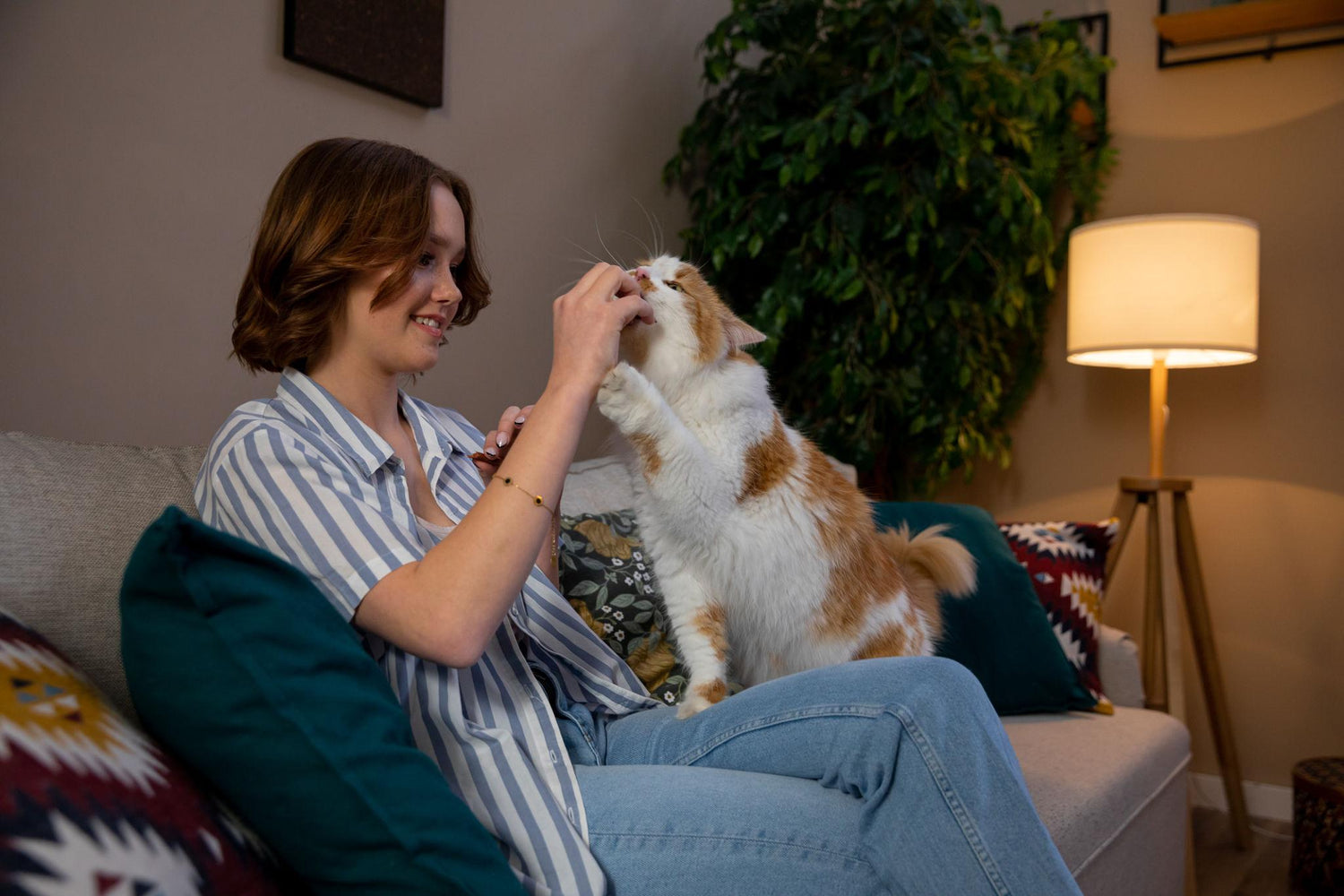
Do Cats Love Their Owners? Understanding How Cats Show Affection
For years, cats have had a reputation for being independent, mysterious, and sometimes even aloof. Unlike dogs, which often wear their emotions on their sleeves, cats tend to express their feelings in more subtle ways. This has led many people to ask an important question: do cats actually love their owners?
The short answer is yes. Research and observations from veterinarians, animal behaviorists, and cat owners around the world suggest that cats can form strong emotional bonds with humans. While they may not express affection in the same way as dogs, cats are capable of trust, attachment, comfort-seeking, and behaviors that indicate genuine affection.
In this guide, we'll explore the science behind feline relationships, how cats show love, and the signs that your cat has formed a special bond with you.
Can Cats Really Love Humans?
Many experts believe cats are capable of experiencing positive emotional attachments to people. While it's impossible to know exactly what a cat is feeling, studies have shown that cats often develop secure bonds with their owners similar to the attachment infants develop with caregivers.
Cats depend on humans for food, shelter, safety, and social interaction. Over time, these experiences help build trust and familiarity. For many cats, their owner becomes an important source of comfort and security.
This doesn't necessarily mean cats experience love exactly as humans do. However, their behaviors strongly suggest they form meaningful emotional connections.
How Do Cats Show Love?
Cats communicate differently than humans. They don't say "I love you," but they often express affection through body language and behavior.
Understanding these signs can help you recognize when your cat is showing trust and attachment.
Slow Blinking
One of the most common signs of feline affection is slow blinking.
When a cat slowly closes and opens their eyes while looking at you, they are demonstrating trust. In the animal world, closing your eyes around another creature makes you vulnerable.
Many cat owners refer to slow blinking as a cat's version of a kiss.
If your cat slow blinks at you, try slowly blinking back. Many cats respond positively.
Following You Around the House
Does your cat follow you from room to room?
Many cats enjoy being near the people they trust most. While they may not always want to sit on your lap, they often feel comforted by your presence.
A cat that consistently chooses to stay close to you may be expressing affection and attachment.
Purring Around You
Cats purr for several reasons, but contentment is one of the most common.
If your cat purrs while sitting near you, being petted, or resting on your lap, it's usually a sign that they feel comfortable and secure.
Purring often occurs during positive social interactions between cats and their favorite humans.
Head Butting and Face Rubbing
When cats rub their face against your hand, leg, or face, they're doing more than seeking attention.
Cats have scent glands on their cheeks and forehead. By rubbing against you, they leave behind scent markers that help identify you as part of their trusted social group.
This behavior is called bunting and is considered a strong sign of affection.
Making Biscuits on You
Many cats knead their owners with alternating paw movements, a behavior often called making biscuits.
Kneading is associated with comfort and security. Cats frequently knead when they feel relaxed and happy.
If your cat kneads your lap, chest, or blanket while sitting with you, they are likely expressing trust and contentment.
Sleeping Near You
Sleep is one of the most vulnerable times for a cat.
When a cat chooses to sleep beside you, on your bed, or even on your chest, they are demonstrating significant trust.
Cats naturally seek safe places to rest, and choosing you as part of that safe space is a positive sign.
Bringing You "Gifts"
While not always appreciated by humans, bringing gifts is often viewed as a social behavior.
Some cats bring:
- Toys
- Socks
- Leaves
- Small prey
This behavior may stem from instinct, but many experts believe it can also represent a form of sharing within a social group.
Your cat may be treating you like family.
Why Do Cats Sit on Their Owners?
Many cats enjoy sitting on their owners because humans provide warmth, comfort, and companionship.
Your lap offers:
- Body heat
- Familiar scent
- Security
- Relaxation
Cats often choose the laps of people they trust most.
Do Cats Miss Their Owners?
Yes, many cats appear to miss their owners when they are away.
Cats may show signs such as:
- Waiting by the door
- Increased vocalization
- Changes in routine
- Seeking out your belongings
- Excitement when you return
Some cats are more independent than others, but many clearly recognize and prefer their favorite people.
Do Cats Have a Favorite Person?
Many cats develop a stronger bond with one particular person.
A cat's favorite person is often someone who:
- Feeds them regularly
- Plays with them
- Respects their boundaries
- Provides comfort
- Maintains a consistent routine
That person may become the cat's primary source of security and affection.
Why Are Cats Sometimes Distant?
Cats express affection differently than dogs.
A cat can love their owner while still:
- Wanting personal space
- Sleeping alone
- Ignoring attention sometimes
- Being selective about physical contact
Their independence doesn't mean they don't care. It simply reflects their unique personality and communication style.
Do Cats Love Their Owners as Much as or More Than Dogs?
This question is difficult to answer because cats and dogs express affection differently.
Dogs were domesticated to work closely with humans and often show their emotions openly. They may greet their owners enthusiastically, follow them constantly, and seek frequent interaction. Cats, on the other hand, tend to communicate in more subtle ways.
Research suggests that cats can form strong emotional attachments to their owners, but they often display affection differently than dogs. A cat may show love through slow blinking, sleeping nearby, kneading, purring, following you from room to room, or simply choosing to spend time in your presence.
Rather than asking whether cats love their owners more or less than dogs, it may be more accurate to say they love differently. Both animals can form deep bonds with humans, but they express those bonds through different behaviors and social structures.
Do Cats Love Their Owners Unconditionally?
Cats can develop strong emotional attachments to their owners, but their relationships are often built on trust, consistency, and positive experiences.
Unlike the common belief that pets provide completely unconditional love, most animal behavior experts suggest that relationships between pets and humans are based on mutual care and trust. Cats depend on their owners for food, safety, comfort, and companionship, while owners provide a stable environment and affection.
A cat that trusts you will often continue showing affection even when you are not actively providing food or attention. However, cats are also individuals with preferences, boundaries, and emotions.
This means their affection is genuine, but it may not always fit the human definition of unconditional love.

Do Cats Love Their Owners? What Does Research Say?
Several studies have provided evidence that cats form meaningful attachments to their owners.
One of the most well-known studies was conducted by researchers at Oregon State University. The study found that many cats display secure attachment styles similar to those seen in human infants and dogs.
During the study, cats showed signs of comfort and confidence when their owners were present and displayed mild stress when separated from them. Once reunited, many cats returned to calm and secure behavior.
Researchers concluded that cats are capable of forming strong social bonds with their caregivers and often view them as a source of security.
These findings challenge the old stereotype that cats are emotionally distant or indifferent to humans.
Do Cats Love Their Owners Scientifically?
From a scientific perspective, evidence suggests that cats form social and emotional bonds with humans.
Studies examining feline behavior, attachment patterns, and hormone responses indicate that cats recognize familiar people, prefer certain individuals, and seek comfort from trusted owners during stressful situations.
Scientists have observed behaviors that support emotional bonding, including:
- Seeking physical proximity
- Greeting owners at the door
- Sleeping near owners
- Purring during interaction
- Following owners around the home
- Seeking reassurance in unfamiliar situations
While science cannot directly measure "love" in the human sense, the evidence strongly supports the idea that cats form meaningful emotional attachments to the people they trust.
Do Cats Love Their Owners More Than Food?
Many people assume that cats only care about food, but research suggests the answer is more complicated.
In a study conducted by animal behavior researchers, many cats were given a choice between food, toys, scents, and social interaction with humans. Surprisingly, a significant number of cats chose human interaction over food.
This does not mean every cat prefers people to food all the time. Individual personalities vary greatly. Some cats are highly food-motivated, while others place greater value on social interaction.
The study demonstrated that for many cats, their relationship with humans can be just as important—or even more important—than food in certain situations.
Do Cats Love Their Owners' Scent?
Cats rely heavily on scent to understand their environment.
Your scent helps your cat identify you, feel secure, and recognize you as part of their social group. This is one reason many cats enjoy sleeping on their owner's clothes, blankets, or bedding.
Cats often seek out objects carrying their owner's scent when left alone. Some may curl up on recently worn clothing or rest in places where their owner's scent is strongest.
While scientists cannot say cats "love" a scent in the same way humans experience emotions, their behavior suggests that familiar scents provide comfort, security, and reassurance.
A cat choosing to sleep on your clothes is often a sign of attachment and trust.
Do Cats Love Their Owners More Than Themselves?
Cats naturally prioritize their own safety and survival instincts. This does not mean they are selfish; it simply reflects how animals are biologically programmed.
Cats generally do not think about relationships in terms of loving someone more than themselves. Instead, they form social bonds while still maintaining behaviors necessary for their own wellbeing.
A cat may show remarkable loyalty and affection toward an owner by:
- Staying close during illness
- Seeking comfort from them
- Greeting them daily
- Sleeping nearby
- Following them around the house
However, cats also need personal space, rest, food, and security. Their ability to balance independence with affection is part of what makes feline relationships unique.
Rather than loving their owners more than themselves, cats often form strong, trusting bonds while maintaining their natural independence.
Signs Your Cat Loves You
Here are some of the strongest signs that your cat loves and trusts you:
- Slow blinking
- Purring near you
- Head bunting
- Face rubbing
- Following you around
- Sleeping beside you
- Kneading on you
- Showing their belly
- Greeting you at the door
- Bringing gifts
- Seeking your attention
- Relaxing in your presence
The more of these behaviors your cat displays, the stronger your bond is likely to be.
How to Strengthen Your Bond With Your Cat
Building a stronger relationship with your cat takes time and consistency.
Respect Their Boundaries
Allow your cat to approach you on their terms.
Play Every Day
Interactive toys help strengthen trust and provide mental stimulation.
Create Comfortable Spaces
Cats appreciate cozy beds, cat trees, window perches, and safe resting areas.
Establish a Routine
Cats thrive on predictability and often feel more secure when daily activities are consistent.
Use Positive Reinforcement
Reward desired behaviors with treats, praise, or play.
The Science Behind Cat-Human Bonds
Recent studies suggest cats may form attachment styles similar to those seen in human infants.
Researchers found that many cats display secure attachment behaviors, including seeking comfort from their owners during stressful situations.
These findings challenge the outdated belief that cats are emotionally detached from humans.
Instead, evidence suggests cats are capable of forming meaningful social bonds while maintaining their naturally independent personalities.
Final Thoughts
So, do cats love their owners?
The evidence strongly suggests they do. Cats may not wag their tails, jump excitedly, or seek constant attention like dogs, but they show affection in their own unique ways. Through purring, slow blinking, kneading, head bunting, sleeping nearby, and seeking your company, cats communicate trust, comfort, and attachment.
Every cat has its own personality, and some are more affectionate than others. However, when a cat chooses to spend time with you, seeks your presence, and displays signs of trust, it's a strong indication that you've earned a special place in their world.
Understanding these behaviors helps cat owners appreciate just how deep and meaningful the human-cat bond can be.

Leave a comment
This site is protected by hCaptcha and the hCaptcha Privacy Policy and Terms of Service apply.